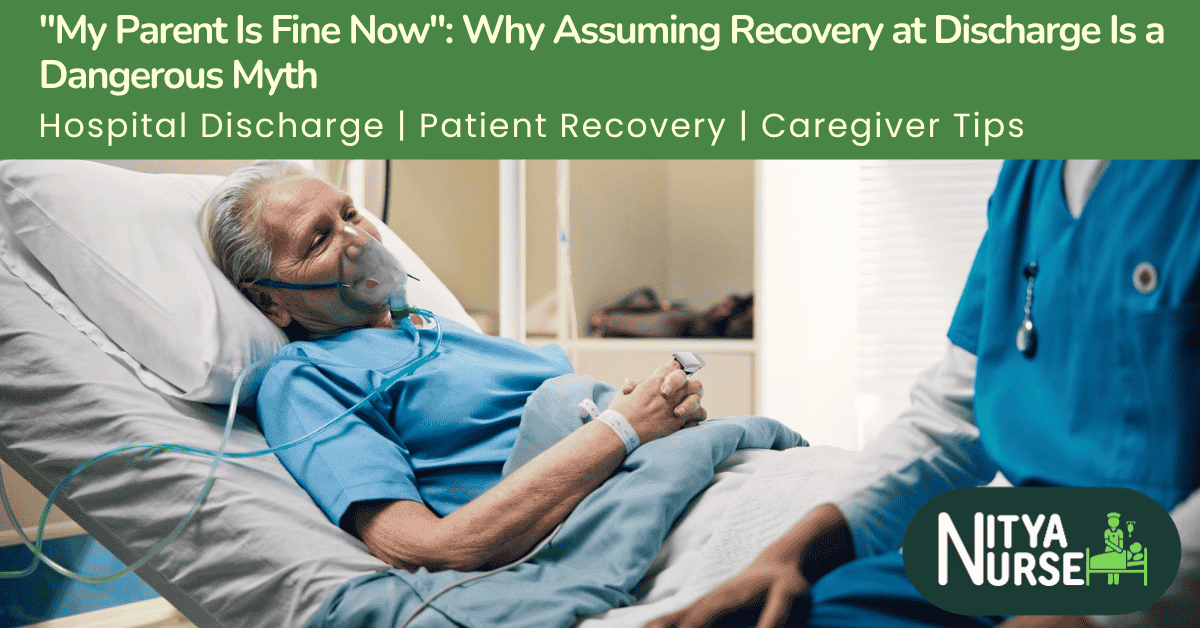
The day an aging parent is discharged from the hospital is often marked by immense emotional relief. After days or weeks filled with sterile hallways, medical alarms, and mounting anxiety, finally bringing a mother or father back through the front door feels like a victory. In that joyful moment, it is easy to believe the hardest battle is behind you and that your parent is finally “fine.”
However, believing that hospital discharge equals full recovery is one of the costliest and most dangerous myths in elder care.
Hospital discharge does not mean a patient is cured; it simply means they have stabilized enough to no longer require an acute hospital bed. The medical journey has not ended; it has merely transitioned. During recovery at home, elderly patients remain physically fragile, medically delicate, and vulnerable to setbacks.
5 Point Making Critical Difference
Understanding the critical difference between hospital stabilization and true patient recovery is the single most important step families in Mumbai and Navi Mumbai can take to prevent avoidable complications and hospital readmissions.
1. The Environment Changes, But the Need for Clinical Care Does Not
What changes on discharge day are not the patient’s medical requirements but the environment in which those requirements must be met.
In a hospital, a patient is surrounded by trained clinicians. Vitals are checked on strict schedules, medication timings are calibrated to the minute, and changes in oxygen saturation or blood pressure are flagged immediately.
The moment the patient arrives home, that clinical safety net vanishes. The entire burden shifts onto family members who, despite their love and dedication, rarely have the clinical training required to manage surgical incisions, IV lines, catheters, or complex pharmacology. This knowledge gap is precisely where complications take root.
Effective post-hospital care requires acknowledging that your parent still needs the same level of discipline at home:
- Precise administration of medications as prescribed.
- Systematic tracking of vital signs and hydration.
- Sterile wound care and catheter hygiene.
- Assisted, biomechanically safe movement to prevent falls.
2. The Hidden Fragility: Physical Weakness and Emotional Stress
One of the most overlooked aspects of recovery at home is how deceptive a patient’s appearance can be. Relieved to be back in their familiar surroundings, elderly parents often attempt to sit up, walk, or resume their daily household routines too quickly.
Physically, their muscles have experienced rapid deconditioning from days of bed rest. A sudden loss of balance or a dizzy spell can lead to catastrophic falls, fractures, or ruptured surgical sutures.
Simultaneously, the emotional toll of hospitalization frequently emerges post-discharge. Elderly patients often experience post-hospital delirium, acute anxiety, disorientation, or depression. These psychological stressors directly impair immune function, reduce appetite, and significantly slow down physical healing.
3. The Trap of Dismissing Early Warning Signs
In a hospital room, a mild low-grade fever, a slight drop in appetite, or subtle ankle swelling prompts immediate diagnostic checks. At home, well-meaning families often write off these subtle red flags as simple “fatigue from the car ride” or “post-hospital tiredness.”
Adopting a “wait and watch” mindset during early post-hospital care can quickly escalate into a midnight medical crisis. A low-grade fever can signal an emerging catheter-associated urinary tract infection (CAUTI) or surgical site infection. A slight drop in oxygen saturation could point toward developing pulmonary congestion.
A significant percentage of hospital readmissions occur within the first few days after discharge. These setbacks rarely stem from failed surgeries or ineffective hospital treatments; they happen because subtle complications were overlooked during the unmonitored transition home.
4. How Professional Home Nursing Bridges the Clinical Gap
Because the post-discharge window is still an active clinical phase, relying solely on informal family caregiving leaves too much to chance. Having a trained professional on-site ensures clinical continuity, bridges the hospital-to-home gap, and establishes a secure recovery environment.
A qualified home nursing professional provides essential safeguards:
- Continuous Clinical Oversight: Monitors vitals, tracks fluid balance, manages complex medication schedules, and performs sterile wound dressings.
- Early Detection of Red Flags: Identifies subtle clinical changes before they escalate into conditions requiring emergency hospitalization.
- Safe Mobility and Fall Prevention: Employs proper transfer techniques to help the patient stand, walk, and rebuild strength safely.
- Infection Control Protocols: Enforces hospital-grade hygiene, which is vital in humid, high-density environments like Mumbai, where fungal and bacterial infections thrive.
- Prevention of Secondary Complications: Implements scheduled repositioning to eliminate the risk of pressure sores (bedsores) and deep vein thrombosis.
- Hands-on Family Guidance: Trains family members on safe lifting, feeding techniques, and red-flag identification.
- Reduced Caregiver Burnout: Allows family members to provide emotional warmth and reassurance without the anxiety of managing technical medical tasks.
5. Shift Your Mindset: From “Caregiving” to “Continuing Treatment”
To protect recovering parents, families must fundamentally reframe their perspective. Bringing a parent home is not simply a return to normal domestic life; it is an active continuation of their medical treatment plan in a domestic setting.
Hospital discharge planning must extend past the hospital pharmacy counter. It must encompass a structured daily schedule, dedicated medical documentation, room safety modifications, and professional clinical supervision during the critical early days.
Conclusion
Discharge is not recovery. It is the vulnerable threshold where recovery must be managed most carefully.
Assuming your parent is completely fine simply because they have arrived home leaves their health vulnerable during their most fragile hours. By combining family love with professional home nursing attendant services, you create a structured, clinically sound environment that fosters genuine healing.
If you are preparing for a hospital discharge in Mumbai or Navi Mumbai, NityaNurse provides the experienced transitional nursing support needed to keep your parent safe, supported, and on the right path to a lasting recovery.